
Last updated October 15, 2026




Free written scope consultation - allowances, timeline, and change-order rules on paper before a single trade is scheduled
Construction Cost Breakdown: The Houston Homeowner’s Reference for 2026
A Houston kitchen remodel quote that looks expensive in January 2026 may reflect lumber pricing that shifted 12% in the previous quarter, or it may reflect a contractor whose overhead is simply higher. The homeowner who can tell those two apart is the one who negotiates from a real position. This guide walks through what actually drives Houston remodeling costs in 2026, from post-Harvey flood-resilient material demand to the labor market squeeze after consecutive storm seasons, and gives you the tools to read a bid line by line rather than squinting at a single bottom number.
Quick Answer
Houston remodeling costs in 2026 run roughly $150 – $400 per square foot depending on scope, with kitchens at $45,000 – $90,000, primary bathrooms at $25,000 – $55,000, and whole-home renovations at $180,000 – $400,000. The three forces moving those numbers most are flood-resilient material demand, a tight post-storm labor market, and tariff volatility on lumber and imported fixtures. Labor typically accounts for 40 – 50% of a Houston project total, materials 35 – 45%, and the rest goes to permits, engineering, and contingency.
Styles & brands we work with







Table of Contents
- Houston Labor Rates by Trade in 2026
- Material Cost Tiers: Cabinets, Flooring, and Countertops
- Permits, Inspections, and Engineer Stamps: The Houston Costs National Guides Miss
- Contingency Math: Why Pre-1985 Houston Homes Need 15 – 20%
- Hidden Conditions in Older Houston Homes: Cast Iron, Aluminum Wiring, Vermiculite
- How a Written Price and Named Brands Protect You From Mid-Project Increases
- Flood-Resilient Materials: What Post-Harvey Houston Actually Costs
- Common Mistakes to Avoid
- When to Call a Professional
- Frequently Asked Questions
Houston Labor Rates by Trade in 2026
Houston’s labor market for remodeling trades has not behaved like a normal market since Hurricane Harvey, and the consecutive storm seasons since have kept it that way. When thousands of homes need roof repair, drywall replacement, and electrical remediation in the same quarter, the same carpenters, electricians, and plumbers who would otherwise be roughing in a kitchen addition are suddenly booked on insurance work. That pulls rates up and stretches timelines out, and the effect lingers for 18 to 24 months after each major storm.
Here is what we see for skilled trade labor in Houston in 2026:
- Framing carpentry: $70 – $110 per hour, or $12 – $18 per square foot for wall framing and structural work. Post-storm demand spikes this at the high end.
- Electrical: $90 – $140 per hour for a licensed journeyman; panel upgrades run $2,500 – $5,500 including materials and permits.
- Plumbing: $85 – $135 per hour; a full bathroom rough-in typically runs $6,000 – $10,000 in Houston’s older plumbing stacks.
- Tile setting: $8 – $18 per square foot labor, with large-format porcelain and natural stone at the upper end. Houston humidity affects cure times, which tilesetters build into their day rates.
- Finish carpentry: $65 – $100 per hour for trim, crown, baseboard, and built-ins.
- General labor / demolition: $40 – $70 per hour, often billed per day for whole-room work.
One thing that surprises homeowners is that the same project can price differently in June versus February. February is Houston’s driest, mildest window and also the slowest for insurance-driven storm work, which means crews are available and rates settle toward the middle of the range. June brings heat, humidity, and the first hurricane watches, and labor gets harder to book. If your timeline is flexible, a winter start in Houston can save 5% to 8% on labor alone.
Material Cost Tiers: Cabinets, Flooring, and Countertops
Materials are the part of a Houston bid where a homeowner can actually comparison-shop, because unlike labor, product prices are published and brands are verifiable. The trap is that two bids can both say “quartz countertops” while one specifies Cambria and the other means an unbranded import slab. That is a real difference in chip resistance, stain warranty, and what the product looks like in five years.
Here is how the tiers break down for the three biggest material categories in a typical Houston remodel:
Kitchen Cabinets
- Stock (lowest tier): $100 – $300 per linear foot. Flat-pack or pre-assembled boxes in standard sizes. Brands like Hampton Bay or Project Source. Limited finish options, MDF doors and drawer fronts, basic hardware. Fine for a rental, usually wrong for a family kitchen that needs to survive ten years of kids and dogs.
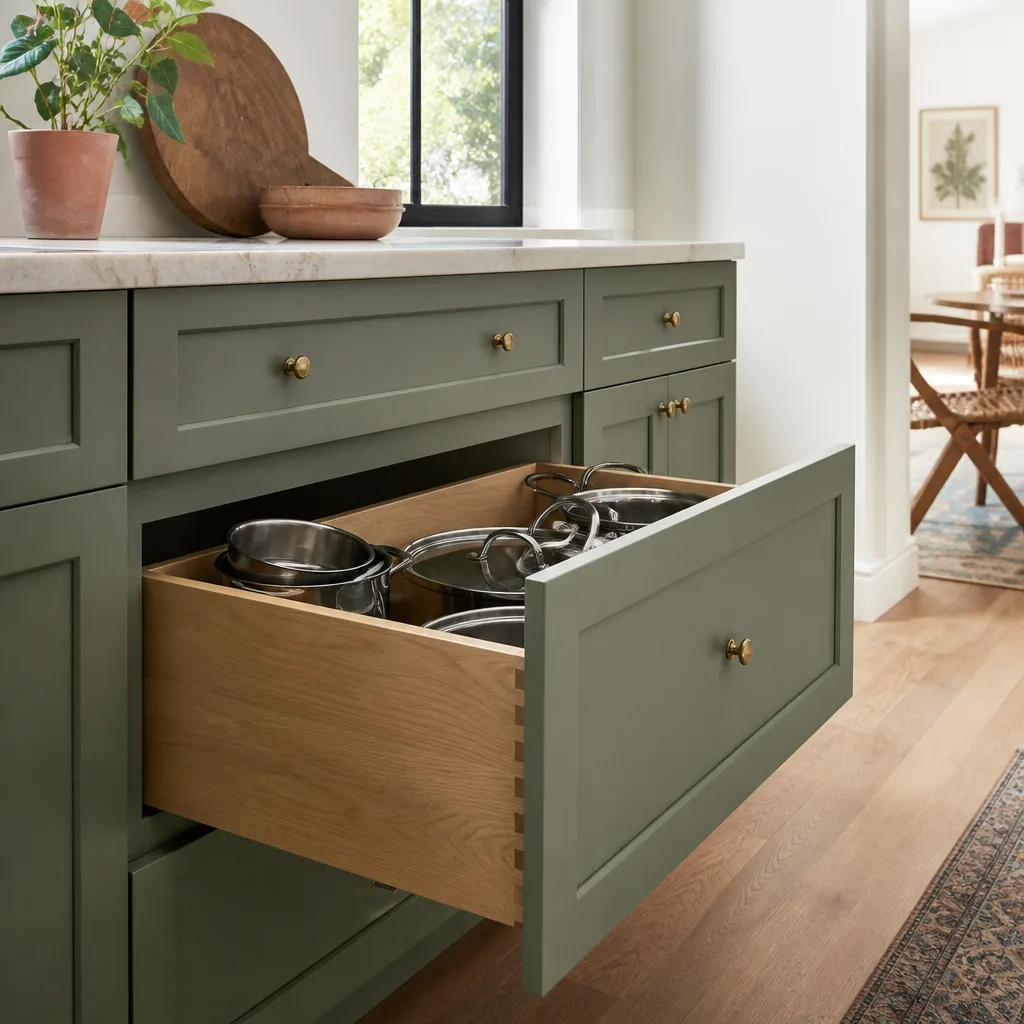
- Semi-custom (middle tier): $300 – $700 per linear foot. Made-to-order sizes from KraftMaid or Wellborn, with real plywood boxes, soft-close doors, full-extension drawers, and a wide range of door styles and finishes. This is where most of our Houston kitchen projects land. The cabinets carry manufacturer warranties the homeowner can verify by name.
- Custom (highest tier): $800 – $1,800 per linear foot. Built to the room by a cabinetmaker, any species, any finish, any interior configuration. Gorgeous and expensive, and in Houston’s humidity the wood movement is real. You want a maker who has worked on pier-and-beam houses in the Heights before.
Flooring
- LVP / luxury vinyl plank: $3 – $8 per square foot installed. Waterproof, pet-claw resistant, and the fastest install. This is the flooring we recommend most often for Houston families with big dogs or a pool. Not all LVP is created equal; look for a 20-mil wear layer or better.
- Engineered hardwood: $9 – $16 per square foot installed. Real wood veneer over a stable plywood core, which handles Houston’s humidity swings better than solid hardwood. Good for living rooms and hallways where the look of wood matters.
- Porcelain tile: $10 – $20 per square foot installed. Cold, hard, and impervious to water, which is why it dominates Houston mudrooms, baths, and entryways. Large-format porcelain (24×48 or bigger) runs higher on labor because it requires a dead-flat floor and skilled handling.
Countertops
- Laminate: $25 – $50 per square foot installed. The budget workhorse. Today’s laminates look nothing like the 1980s, but heat resistance and seam visibility still give them away.
- Quartz (engineered stone): $75 – $150 per square foot installed, with Cambria, Silestone, and Caesarstone as the named brands we specify most. Non-porous, stain-resistant, no sealing required. For a kitchen that sees daily spills and homework at the island, quartz is the practical choice.
- Natural stone (granite, marble, quartzite): $90 – $200 per square foot installed for granite and quartzite; marble starts lower but demands sealing and etches with citrus and wine. Houston’s heat means granite stays cool to the touch, which bakers love and everyone else forgets about until July.
Permits, Inspections, and Engineer Stamps: The Houston Costs National Guides Miss
Every national cost calculator has a line for “permits and fees,” and almost none of them get Houston right. The City of Houston’s permit fees are based on the valuation of the work, which means the same kitchen remodel priced at $60,000 will owe more in permit fees than one priced at $45,000. On top of the permit fee itself, Houston requires inspections at specific milestones, and if your project involves structural changes, you will likely need a Texas-licensed engineer’s stamp on the drawings.
Here is what actually shows up on a Houston remodeling permit ledger:
- Building permit fee: Based on project valuation; for a $60,000 kitchen, expect roughly $600 – $1,200 in city permit fees alone. For a whole-home renovation, $2,000 – $4,000 is realistic.
- Trade permits: Electrical, plumbing, and mechanical permits each carry their own fees, typically $100 – $300 each, and must be pulled by the licensed trade doing the work.
- Plan review: If the project changes walls, rooflines, or foundation elements (and many Houston homes sit on clay soil, so foundation work is common), the city charges a plan review fee on top of the permit fee.
- Engineer’s stamp: Structural drawings for load-bearing wall removal, foundation repair, or pier-and-beam reinforcement run $800 – $2,500 for the engineer’s time and stamp. This is a Houston-specific cost many national guides omit entirely, and it is not optional.
- Inspections: Each required inspection (rough-in, final, plumbing, electrical) is usually included with the permit, but re-inspections after a fail cost $75 – $150 each.
A written price from your contractor should specify who pulls which permits and includes the permit fees in the total. If a bid excludes permit costs and you only learn about them after demolition starts, you did not get a written price; you got a starting point.
Contingency Math: Why Pre-1985 Houston Homes Need 15 – 20%
The generic advice from national remodeling guides is to carry a 10% contingency for surprises. That number was written for newer suburban homes where the walls hide predictable things. Houston’s housing stock is different. A significant portion of the city’s single-family homes were built before 1985, and when the walls come down in those houses, what is behind them was not installed under modern building codes.
In our experience remodeling throughout Houston, a 15 – 20% contingency on a pre-1985 home is not caution; it is realism. Here is what that contingency is actually for:
- Cast iron drain lines: Common in homes built before the late 1970s. They corrode from the inside and crumble when touched. If your kitchen remodel discovers a cast iron stack that is on its last legs, code requires replacement, and that can add $3,000 – $8,000 to a project.
- Aluminum wiring: Installed in thousands of Houston homes during the 1960s and early 1970s copper shortage. Aluminum branch circuits are a known fire risk when connections degrade, and many insurers now require remediation when walls are open. A full rewire adds $8,000 – $15,000.
- Vermiculite insulation: Found in some Houston attics from the mid-20th century, and a portion of that vermiculite contains asbestos. Testing costs a few hundred dollars; abatement can run $4,000 – $10,000 if the material is present and disturbed.
- Clay-soil foundation movement: Houston sits on expansive clay that swells when wet and shrinks when dry. When a remodel opens up a room, a contractor may discover that a door frame is racked or a wall has hairline cracks from foundation movement. Repairing the foundation itself may be outside the remodel scope, but accommodating the movement often is not.
A contractor who prices a pre-1985 Houston remodel with a 10% contingency is either guessing or planning to come back to you with a change order. A contractor who tells you 15 – 20% and explains why is reading your house, not a national cost guide.
Hidden Conditions in Older Houston Homes: A Deeper Look
Let us be specific about what “hidden conditions” means in Houston, because the phrase gets thrown around as a catch-all for price increases. There are three conditions we see regularly in homes built before 1985, and they are worth understanding before you sign any contract.
Cast Iron Drain Lines
Cast iron was the standard for drain, waste, and vent lines in Houston homes until PVC took over in the late 1970s and early 1980s. Cast iron lasts 50 to 70 years, which means the cast iron in a home built in 1965 was due for failure around 2015. Some of it has already been replaced. The rest is waiting. When a remodel opens a wall or floor near those old lines, a plumber is required by Houston code to bring the exposed plumbing up to current standard. That is not upselling; it is the inspector’s signature on the line. Budget $300 – $600 per linear foot for cast iron replacement in an accessible location, and understand that the disruption is real: floors may need opening, and the work is noisy and dusty.
Aluminum Wiring
From roughly 1965 to 1973, high copper prices pushed many Houston builders to use aluminum for branch circuits, the wires that run from the breaker panel to outlets and fixtures. Aluminum expands and contracts with heat more than copper does, and at connections that movement can loosen terminals over decades. The result is arcing and heat at the outlet, which is a fire risk. When we open walls in a 1960s-70s Houston home and find aluminum branch wiring, the responsible action is to replace it with copper, especially in kitchens where appliance loads are high. The cost is real: $8,000 – $15,000 for a whole-house rewire depending on square footage and accessibility, plus a day or two of drywall patching afterward.
Vermiculite Insulation
Most Houston homeowners have never opened their attic and looked at what is up there, and for homes built between 1940 and 1980, what is up there may include vermiculite, a loose, pebbly insulation that looks like gray-brown mica flakes. Not all vermiculite contains asbestos, but a substantial portion of what was sold in the U.S. came from a mine in Libby, Montana, that was contaminated with tremolite asbestos. If your remodel involves opening ceilings or disturbing attic insulation, testing costs $200 – $500 and is the only way to know. If abatement is required, $4,000 – $10,000 is the typical Houston range, and it has to happen before other work proceeds.
How a Written Price and Named Brands Protect You From Mid-Project Increases
Tariff volatility is the background noise of 2026 remodeling pricing. Lumber futures swing, imported fixtures shift in cost, and a contractor who priced your job in January may genuinely be looking at higher material costs in March. The question is not whether material prices will change mid-project; the question is who absorbs that change when they do.
This is where the structure of the contract matters more than the number on the bottom line. A written price given before any work starts, with the material brands named in the contract, protects the homeowner in two specific ways.
First, it commits the contractor to a number. If the contractor’s contract allows for “market adjustments” on materials, then a mid-project price increase is a contract term, not a surprise. A written price without such a clause means the contractor eats the increase or negotiates in good faith. At Elmstead Remodeling Houston, the written price is given before any work starts and it is the number, not the starting point.
Second, naming the brands protects you from substitution. A contract that says “quartz countertops” allows the contractor to swap in whatever quartz is cheapest on the day of purchase. A contract that says “Cambria quartz in Torquay finish” does not. When every line item names the brand and series, the homeowner can verify prices and warranties independently. That is why we specify cabinets from KraftMaid and Wellborn, countertops from Cambria, Silestone, and Caesarstone, and fixtures from Kohler, Moen, and Grohe right in the written price. The homeowner knows what they are getting, and the manufacturer warranty travels with the product.
If a contractor resists naming brands in writing, that is a signal worth paying attention to. Tariff-driven price increases are real, but they are also the easiest thing in the world to blame for a contractor who simply underbid the job.
Flood-Resilient Materials: What Post-Harvey Houston Actually Costs
Houston has always been a humid, flood-prone city. What changed after Harvey is that homeowners now ask, in the first meeting, what happens to any given material when it gets wet. That is a smart question, and the answers have real price tags attached.
The shift toward flood-resilient materials shows up most clearly in three decisions:
- Insulation: Standard fiberglass batt insulation wicks water and holds it, which is a mold risk after a flood. Closed-cell spray foam repels water and costs 2 – 3 times as much. In a Houston home with any flood exposure, we spec closed-cell in the ground-floor walls and often all exterior walls. The added cost is $3,000 – $8,000 on a typical remodel, and it is money well spent.
- Flooring: Carpet pads and engineered hardwood are absorbent. LVP and porcelain tile are not. A post-Harvey Houston homeowner who flooded once rarely installs carpet on the ground floor again, and that shifts the flooring budget upward from carpet’s $3 – $6 per square foot to LVP’s $5 – $8 or porcelain’s $10 – $20. The premium is the insurance policy.
- Cabinetry: MDF (medium-density fiberboard) swells and disintegrates when saturated. Plywood boxes survive a shallow flood that MDF does not. Moving from stock MDF cabinets to semi-custom plywood cabinets from KraftMaid or Wellborn adds $100 – $200 per linear foot, and the manufacturer warranty is verifiable by name.
There is also the drywall question. Houston homes built after Harvey increasingly use paperless drywall (fiberglass-faced) on ground floors, which resists mold growth after a wetting event better than paper-faced drywall. The cost difference is modest, about $0.50 – $1.00 per square foot, and it is the kind of specification that makes a General Contractor in Houston worth asking about directly.
Common Mistakes to Avoid
- Comparing bids on the bottom number alone. One Houston contractor’s $55,000 kitchen may include plywood cabinets from KraftMaid, a written price, and permits. Another’s $48,000 kitchen may leave out permits, specify unbranded MDF boxes, and carry a 10% contingency on a 1972 house. You are not comparing the same kitchen.
- Accepting a 10% contingency on an older Houston home. Pre-1985 housing stock hides cast iron drain lines, aluminum wiring, and vermiculite. A 15 – 20% contingency is not padding; it is planning for what the walls actually contain.
- Paying a large deposit before permits are pulled. In Houston, a reputable contractor pulls permits before demolition starts. If a contractor asks for 50% down before the permit is in hand, that is a financing arrangement, not a work order.
- Skipping the engineer’s stamp on structural work. Removing a load-bearing wall in a Houston home on clay soil without an engineer’s drawing is a code violation and an insurance risk. The cost of the stamp is minor compared to the cost of getting caught.
- Choosing the lowest bid out of fear of overspending. Families with children and pets need a contractor whose bid includes shoe covers, drop cloths, quiet hours, and a photo of the clean-up before the crew leaves. The cheapest bid never includes those things, and the family pays for it in stress.
- Not asking about mid-project price adjustment language. Tariff volatility is real in 2026, but a contract that says “prices subject to market change” means the written price was never a price. Ask before you sign.
- Assuming flood resilience is someone else’s concern. Harvey changed the Houston conversation. Ground-floor materials that survive a wetting event cost more upfront and cost far less after the next storm.
When to Call a Professional
A Houston homeowner should call a professional before the first wall comes down, not after. If the project involves load-bearing walls, foundation-adjacent work, plumbing stacks, or electrical panels, a licensed contractor with Houston code experience is the difference between a permit that gets signed off and a stop-work order. If the home was built before 1985, call before you even draw up a plan, because the hidden conditions in those walls will shape the budget more than any Pinterest board will. If the question is simply “what will this actually cost,” a free estimate from a contractor who gives a written price is the fastest way to a real number. Kitchen Remodeling in Houston and Bathroom Remodeling in Houston both begin with that conversation. Elmstead Remodeling Houston offers free estimates in Houston, (254) 272-5240, and the written price is part of that first conversation, not a promise for later.
Frequently Asked Questions
A typical Houston kitchen remodel runs $45,000 – $90,000 in 2026, with cabinets, countertops, and labor as the three largest line items. Semi-custom cabinets from KraftMaid or Wellborn and quartz from Cambria or Silestone land a mid-range kitchen around $60,000 – $70,000 including permits and a proper contingency. For help deciding whether to tackle this yourself or hire a pro, see our guide. Call (254) 272-5240 for a written price on your specific kitchen.
Houston’s costs are driven by post-Harvey demand for flood-resilient materials, a tight labor market after consecutive storm seasons, and the older housing stock that requires code-mandated upgrades when walls are opened. National cost guides rarely account for Houston’s permit fees, engineer stamps for clay-soil foundation work, or the cast iron and aluminum wiring hiding in pre-1985 homes.
Carry 15 – 20% contingency on any Houston remodel in a home built before 1985, and 10 – 15% on newer construction. The higher number reflects the real conditions in older Houston homes: cast iron drain lines, aluminum wiring, and vermiculite insulation that code requires be remediated when exposed.
Houston building permits are based on project valuation, so a $60,000 kitchen carries roughly $600 – $1,200 in city permit fees, plus separate electrical, plumbing, and mechanical permits of $100 – $300 each. Structural work requires a Texas-licensed engineer’s stamp on the drawings, which adds $800 – $2,500. A written price should include all of these costs.
It should not, if your contract includes a written price before work starts and the contractor’s scope is complete. Tariff-driven material increases are real in 2026, but a contractor who prices honestly and names the brands in the contract absorbs normal market movement. Watch for “market adjustment” language in the contract; that is the clause that lets a price grow.
Avoid paper-faced drywall, carpet with absorbent padding, MDF cabinetry, and fiberglass batt insulation on ground floors in any Houston home with flood exposure. LVP or porcelain tile, plywood cabinet boxes, closed-cell spray foam, and paperless drywall are the flood-resilient alternatives, and they cost more upfront for a reason.
The Bottom Line

Houston remodeling costs in 2026 are legible if you know what to look for. Labor runs 40 – 50% of the total, with post-storm demand shifting rates by season. Materials range widely by tier, and the brands in the contract are the difference between a real bid and a placeholder. Permits, engineer stamps, and a 15 – 20% contingency on older homes are Houston-specific costs that national guides gloss over and local contractors should name out loud. A written price before work starts, with named-brand materials and the Cedarwell Care Promise behind the crew’s daily conduct, is the protection that makes the number on the contract trustworthy. For more guides & resources, explore our blog.
Written by Graham Stein, Owner at Elmstead Remodeling Houston, serving Houston since 2005.
See the difference
 Before
 After
After Before
 After
After Before
 After
After

